Popular Tarot Spreads and Layouts
The arrangement of cards in a tarot reading - known as a spread or layout - profoundly influences interpretation. Different spreads serve different purposes, from quick daily guidance to comprehensive life analysis. Mastering various spreads expands your ability to address diverse questions and situations.
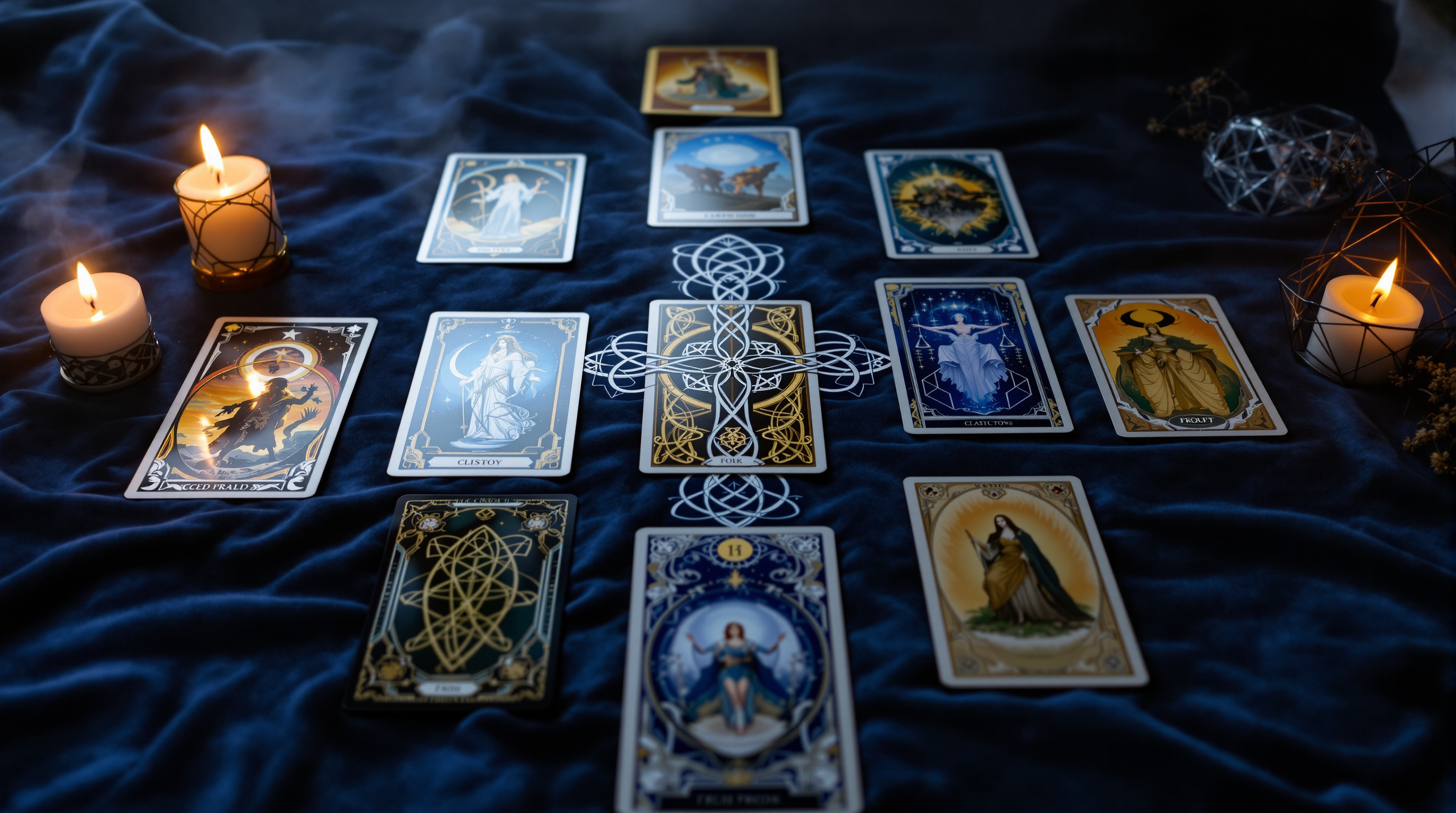
The Three Card Spread
This simple yet powerful spread is perfect for beginners and quick consultations. Three cards are drawn and placed in a row, typically representing Past-Present-Future or Situation-Action-Outcome. Its straightforward structure makes it ideal for daily practice and specific questions.
Variations include Mind-Body-Spirit readings, You-Partner-Relationship analysis, and What to Accept-What to Release-What to Focus On configurations. The three card spread's flexibility makes it a staple in any reader's toolkit.
The Celtic Cross
Perhaps the most famous tarot spread, the Celtic Cross uses ten cards to provide a comprehensive view of a situation. Each position has specific significance:
- Position 1 (Present): The current situation or core issue
- Position 2 (Challenge): Immediate obstacles or influences
- Position 3 (Past): Recent events affecting the situation
- Position 4 (Future): Near-term developments
- Position 5 (Above): Best possible outcome or conscious goals
- Position 6 (Below): Subconscious influences or foundation
- Position 7 (Advice): Suggested approach or attitude
- Position 8 (External): Environmental factors or others' influence
- Position 9 (Hopes/Fears): Inner desires or anxieties
- Position 10 (Outcome): Likely result if current path continues
This spread excels at providing depth and nuance for complex life questions.
The Horseshoe Spread
Using seven cards arranged in a horseshoe shape, this spread offers a balance between the simplicity of three cards and the complexity of the Celtic Cross. It's particularly useful for decision-making and understanding how past influences shape future possibilities.
Relationship Spreads
Love and relationship questions deserve specialized layouts. The two-column spread places cards representing each partner side by side, while the bridge spread identifies what connects or separates two people. These configurations illuminate dynamics that might not emerge from general readings.
Yearly Spreads
For comprehensive life forecasting, the twelve-card yearly spread assigns one card to each month. Some readers expand this to 13 cards, adding a significator representing the year's overall theme. These spreads are popular for birthday readings or New Year consultations. Explore more tarot spreads to expand your practice.
The Decision-Making Spread
When facing a choice between two paths, the decision-making spread offers clarity. Two columns of three cards each represent the potential outcomes, energies, and hidden influences of each option. A seventh card drawn across the top reveals the overarching lesson the universe wants you to understand regardless of which path you take.
This spread is especially useful for career crossroads, relocation decisions, and relationship turning points where both options carry genuine merit and the querent feels genuinely torn.
Choosing the Right Spread
Consider your question's complexity when selecting a spread. Quick, specific questions suit simple layouts, while life-changing decisions or deep self-exploration warrant more elaborate configurations. With experience, you may create custom spreads tailored to particular types of inquiry.
Whatever spread you choose, remember that card positions are guidelines, not rigid rules. Allow your intuition to guide interpretation, and don't hesitate to draw clarifying cards when meanings seem unclear.